Apple Juice Extraction with Pectinase Concentrate: Mash Treatment, Troubleshooting and QC for Juice Plants
For apple juice and cider-base processors: where to dose a pectin-degrading concentrate, how to fix slow pressing and haze, what to check in QC, and how to request a quote.
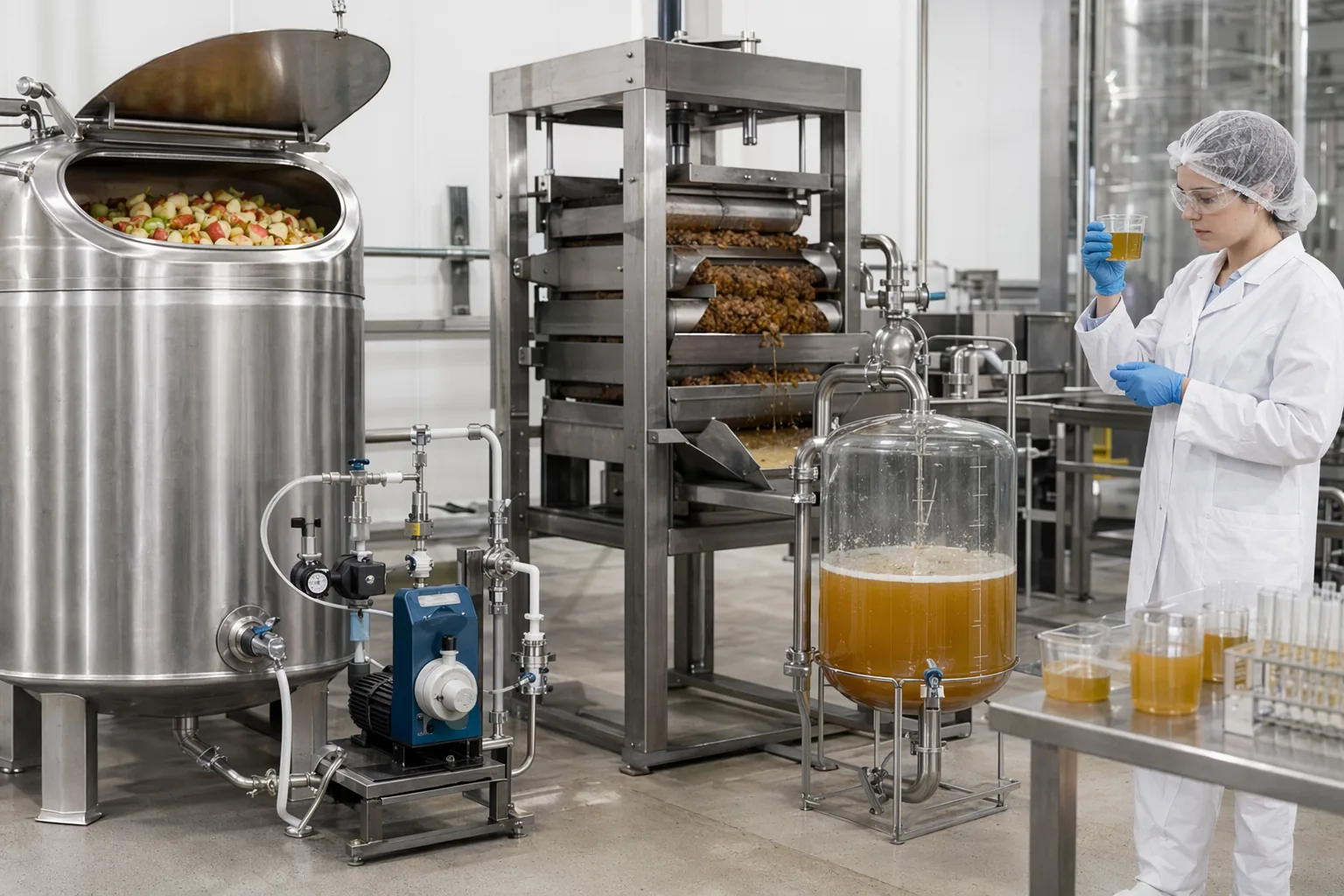
Apple mash holds juice in pectin-rich cell walls. When that pectin is not broken down, the mash stays thick, presses slowly, and the juice is harder to clarify and filter. Pectinase concentrate added to the mash or the juice breaks that pectin down, so a plant recovers more juice and keeps press and filter cycles predictable.
This guide is for juice plants, cider-base producers, contract processors and the distributors who supply them: where to dose, the working range of our concentrate, what to check when pressing or clarification falls short, and which documents to ask for.
Results depend on apple variety, ripeness, milling, temperature and contact time, so the commercial dose is set in your own trial. To request a quote, send the product (liquid or powder, activity grade), quantity, pack size and destination.
Why Apple Mash Needs Depectinization
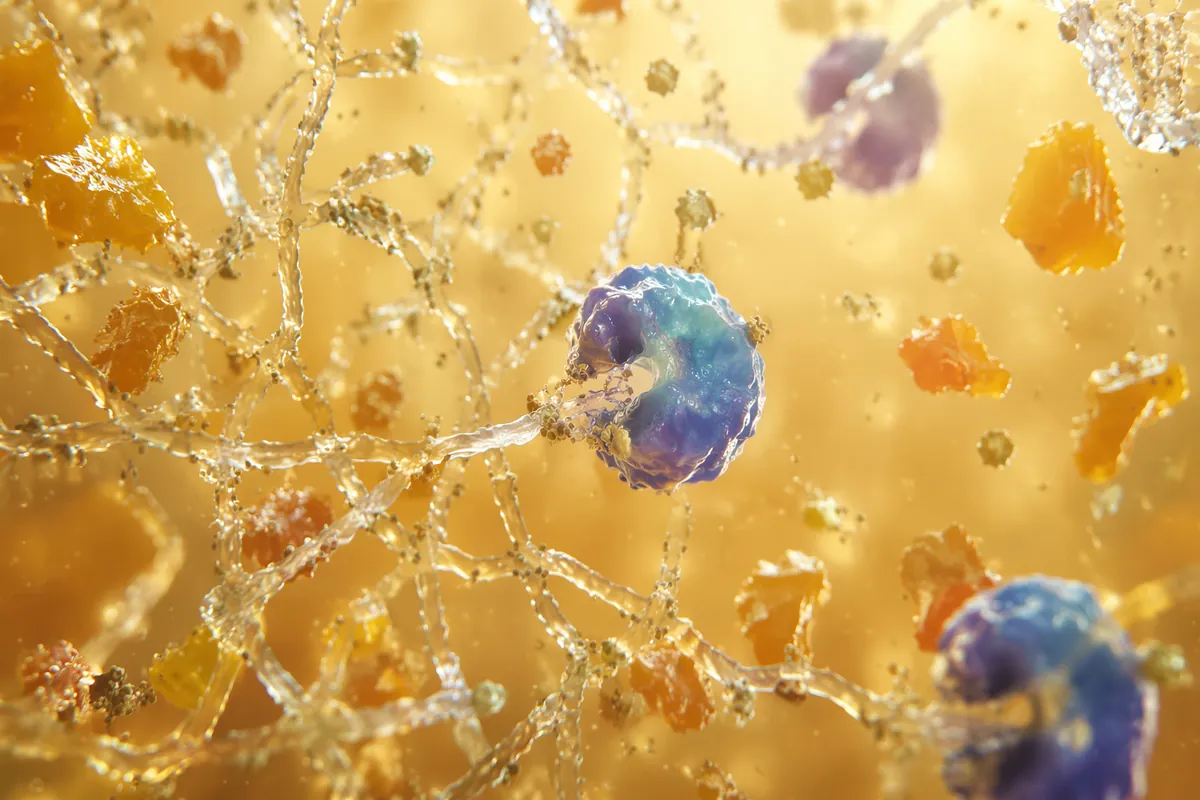
Pectin is the structural polysaccharide that holds apple cell walls and the middle lamella together. In crushed mash it raises viscosity, traps liquid inside the pomace and slows pressing and clarification. Our concentrate combines polygalacturonase (EC 3.2.1.15) and pectin lyase (EC 4.2.2.10) activities: it lowers mash viscosity and opens the fruit matrix so more free-run and press juice can be recovered. For a juice plant the value is not only yield; it is a more controllable extraction, with shorter press cycles, better filtration behavior and steadier haze management.
Improves juice release from apple mash • Reduces viscosity for better press loading • Supports clarification and filtration efficiency • Helps standardize variable fruit inputs
Mash or Juice: Where to Dose
Dose into crushed mash before pressing when the goal is juice release and press yield. Dose into pressed juice before clarification when the goal is lower viscosity and less soluble pectin before settling, centrifugation or membrane filtration. The right point depends on where your bottleneck is: press yield, tank settling, centrifugation, membrane filtration or final clarity. Mix evenly: poor distribution leaves pockets of untreated mash and gives uneven press performance.
For cloudy juice, the aim is controlled extraction without breaking down the haze profile the product needs. For clear juice and concentrate, the aim is depectinized juice that clarifies and filters well.
Mash dosing for press yield • Juice dosing for viscosity and clarification • Even mixing at the dosing point • Separate targets for cloudy and clear juice
Working Range of Our Concentrate
Our pectinase concentrate works at pH 3.0–5.0 and 40°C–55°C, a range that suits the natural acidity of apple mash. It is supplied as a dark brown liquid or a tan powder at 100,000–500,000 PGAU/g. Commercial products declare activity in different units and strengths, so a dose is never copied from another plant or another product: it is set from the activity on our documents and confirmed in your own trial.
Measure mash temperature, pH and hold time at the vessel, not only the set points, and finish the enzyme step before any heat step intended to stop it.
pH 3.0–5.0 • 40°C–55°C • 100,000–500,000 PGAU/g • Liquid or powder
Troubleshooting Slow Pressing and Low Yield
If yield falls short, check the process before changing the enzyme. Confirm that the enzyme went in after crushing, with even mixing and enough residence time. Cold mash, uneven dosing, incorrect dilution water or pH outside the working range can leave pectin partly intact and keep press cake wet. Sulfite, preservatives, cleaning-chemical residues or excessive heat can also reduce enzyme activity.
For high-pectin fruit, compare two or three doses against an untreated control in the same fruit lot and measure free-run volume, press time, cake dryness, soluble solids and viscosity. If yield only improves at a dose that does not pay, adjust temperature and contact time before raising the routine dose.
Run treated and untreated controls in the same fruit lot • Verify actual mash temperature at the dosing point • Use calibrated dosing pumps or weighed additions • Measure cost per additional liter of recovered juice
Troubleshooting Haze and Slow Filtration
If juice stays hazy or filters slowly, test for incomplete depectinization with an alcohol pectin test or a validated in-house method, and record turbidity, viscosity, filter throughput and sediment behavior. Clarification may need a different dose from mash treatment, because enzyme contact, solids level and target clarity differ.
Haze can also come from starch, protein-polyphenol complexes, suspended pulp, microbial issues or incompatible fining conditions; if pectin is not the main cause, a different clarification strategy is needed. Longer holding does not always solve haze, and microbial risk and production scheduling also matter.
QC checks: turbidity, viscosity, pectin test, filtration rate • Separate extraction dose from clarification dose when needed • Confirm enzyme compatibility with fining and filtration steps
QC Checks in Production
Review each incoming enzyme lot against its COA for activity, appearance, batch number and date, and store it as the documents state: liquid refrigerated, powder cool and dry. During processing, monitor mash pH, temperature, contact time, mixing, press yield, viscosity, turbidity, Brix and filtration rate.
Keep batch records that link enzyme lot, dose and process conditions to the finished juice. A simple trend of dose, apple lot and yield shows quickly whether a change comes from the enzyme, the apples or the process.
Review the COA for each lot • Store liquid refrigerated, powder cool and dry • Track yield, viscosity, turbidity and filtration rate • Trend results by apple lot and enzyme batch
Technical Buying Checklist
Product: liquid or powder, and activity grade (100,000 or 500,000 PGAU/g) • Pack size: 1 kg, 5 kg, 25 kg or 200 L • Documents for approval: COA, TDS and SDS • Fruit, process step (mash or juice) and target (yield, clarity, filtration) • Seasonal quantity and destination
Request the COA, TDS, SDS, activity method, recommended application conditions, packaging options, shelf-life or retest guidance, and storage requirements. Supplier qualification should include sample evaluation, pilot validation, lot-to-lot consistency review, documentation review, and commercial logistics assessment.
Request a Quote for Apple Juice Supply
Juice plants, cider-base producers, contract processors and distributors can request a quote by email or through the inquiry form. Send the product (liquid or powder, activity grade), quantity, pack size and destination, plus your fruit and the process step you want to improve. Pricing is quoted per order. Free sample included with every qualified inquiry.
Pectinase (Concentrate) for Research & Industry
Need Pectinase (Concentrate) for your lab or production process?
ISO 9001 certified · Food-grade & research-grade · Ships to 80+ countries
Frequently Asked Questions
How does pectinase improve apple juice extraction?
Pectinase breaks down pectin in apple cell walls and middle lamella, reducing mash viscosity and releasing juice trapped in the pomace structure. This can improve press yield, shorten press cycles, and support downstream clarification. The actual effect of pectinase on apple juice extraction depends on apple variety, maturity, milling, pH, temperature, contact time, dosage, and the enzyme activity profile.
What dosage of pectinase should be used in apple juice processing?
There is no universal dosage because commercial pectinase products differ in activity and formulation. A practical approach is to follow the supplier TDS, then run a pectinase concentration apple juice experiment with an untreated control and several dosage levels. Select the dosage that delivers the best combination of yield, viscosity reduction, filtration improvement, product quality, and cost-in-use.
What pH and temperature suit pectinase in apple juice?
Apple mash is naturally acidic. Our concentrate works at pH 3.0–5.0 and 40°C–55°C. Higher temperatures may increase reaction speed, but excessive temperature or hold time can affect color, aroma or product style, so confirm the final window in plant trials.
Should pectinase be added to apple mash or pressed juice?
Both approaches are used. Mash treatment supports juice release during pressing and can improve extraction efficiency. Juice treatment is often used to reduce soluble pectin before clarification or filtration. The preferred point of addition depends on whether the bottleneck is press yield, tank settling, centrifugation, membrane filtration, or final clarity. Pilot validation should test the actual process sequence.
Why is my pectinase-treated juice still cloudy?
Cloudiness may come from incomplete depectinization, starch, protein-polyphenol haze, suspended pulp, microbial issues, or incompatible fining conditions. First confirm pH, temperature, dosage, mixing, and contact time. Then run a residual pectin test, turbidity measurement, and filtration comparison against a control. If pectin is not the main cause, a different clarification strategy may be required.
How should an industrial buyer qualify a pectinase supplier?
Start by requesting COA, TDS, SDS, activity method, lot traceability, storage guidance, and shelf-life or retest information. Then test samples in your own apple juice extraction process and compare performance against current or control conditions. Supplier qualification should also review lot consistency, technical support, packaging suitability, lead time, logistics reliability, and total cost-in-use rather than price alone.
Plan Your Apple Juice Trial
Request Pectinase Concentrate documentation and a pilot sample for apple juice extraction validation. See our application page for fruit pectin removal for specs, MOQ, and a free 50 g sample.
Contact Us to Contributehello@mail.topenzyme.com